
7 Types of Best Cutting Board Wood Set You Should Know
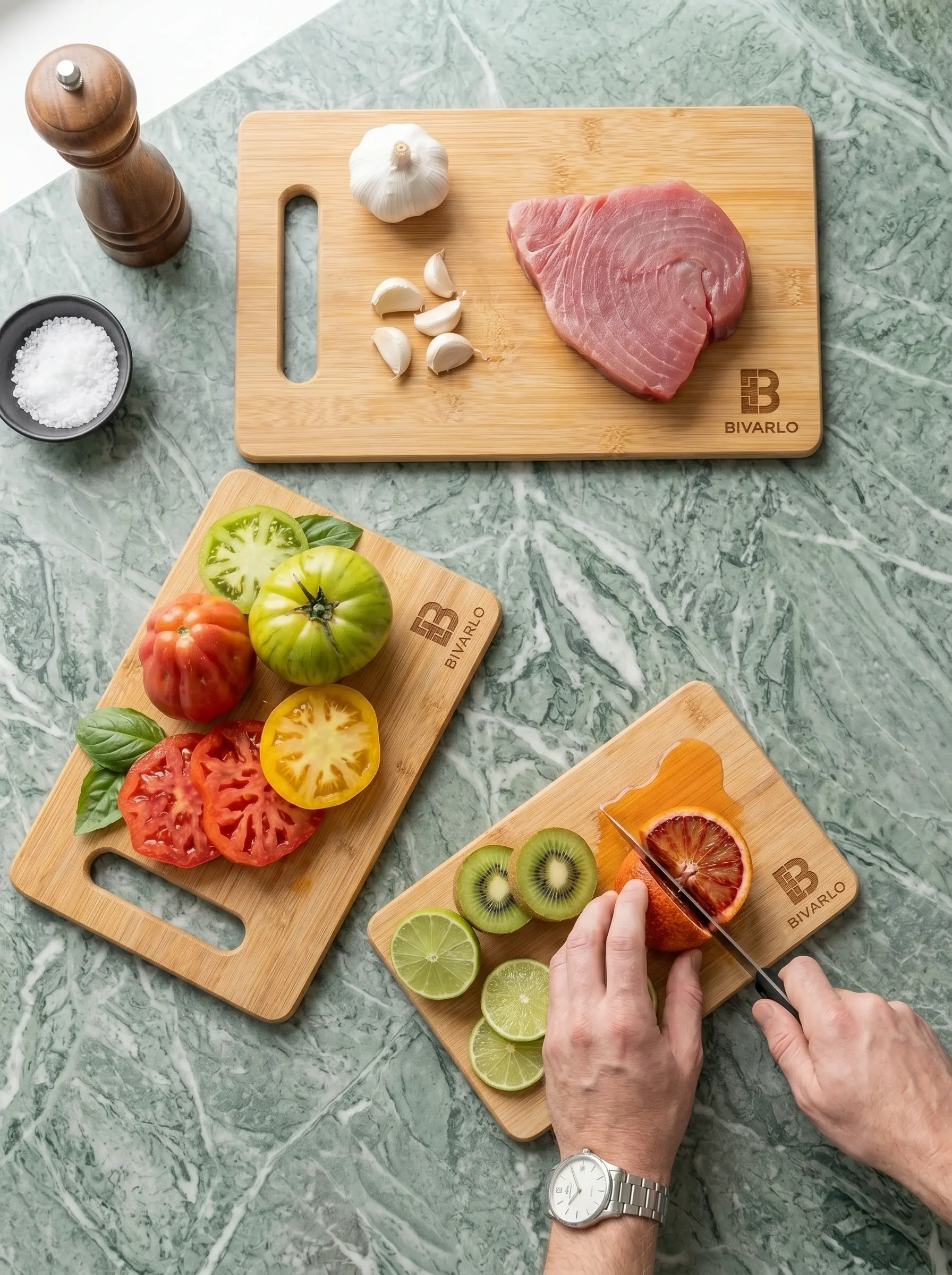

Choosing the right cutting board wood changes everything about how your kitchen feels. The right board is gentle on your knives, hygienic for raw meat, and beautiful on your counter. The wrong one dulls blades, traps bacteria, and warps after a few washes. In this 2026 guide we compare the best species, share care and cleaning tips, and help you pick a board that will last a decade.
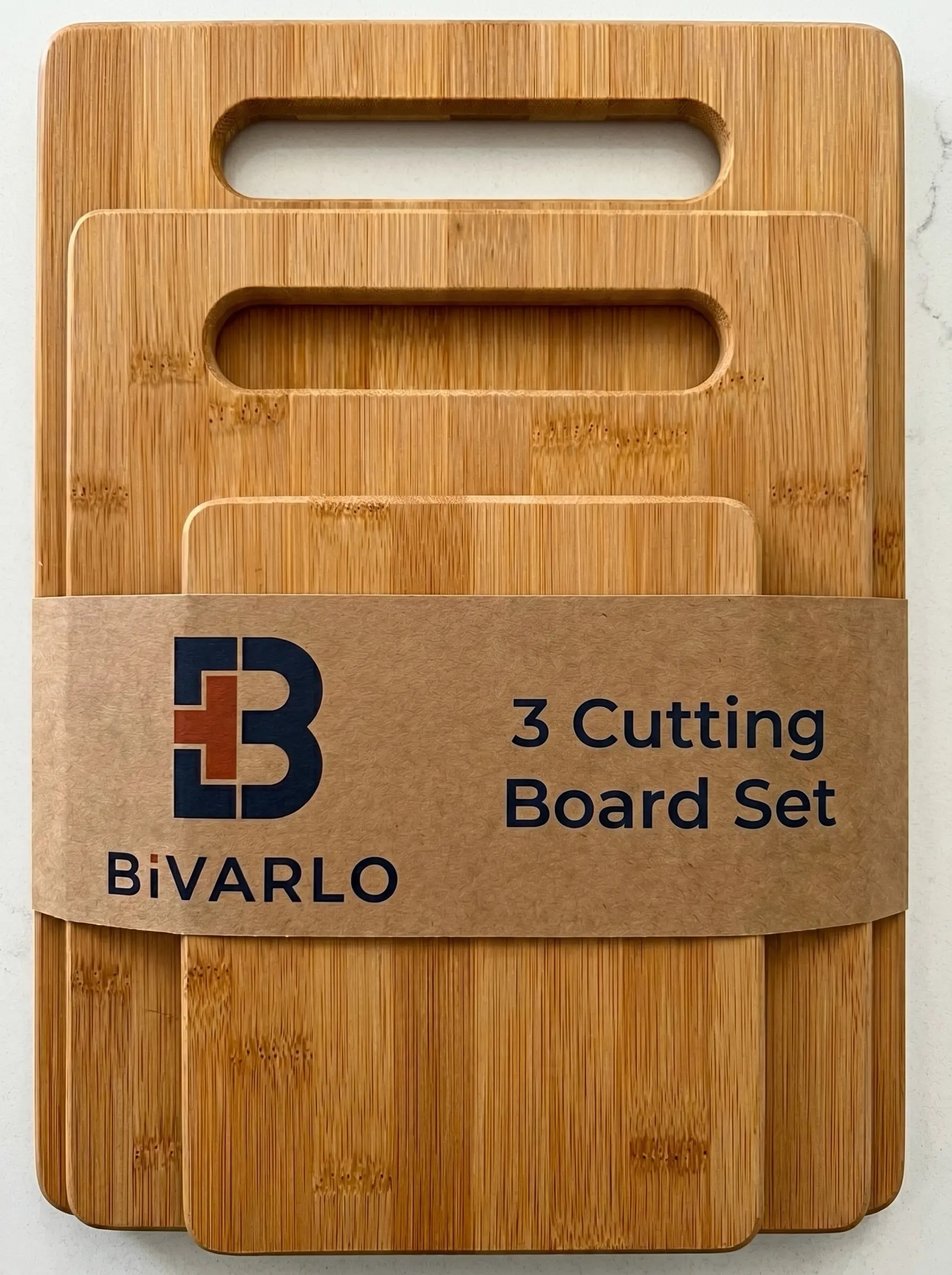
Bivarlo Bamboo Cutting Board
Organic bamboo · Deep juice groove · Food-safe finish · Reversible prep & serve
What Is Cutting Board Wood (And Why It Matters)
Cutting board wood simply means a wood species dense and stable enough to be turned into a kitchen prep surface. A good board has a tight grain, a Janka hardness around 1,000 to 1,500 lbf, and food-safe properties (no toxic resins, no open pores that swallow juices). Soft pines, oaks, and most exotic woods fail at least one of those tests, which is why you almost never see them in the best wooden chopping board picks.
The science is simple. Closed-grain hardwoods self-heal around knife cuts and resist moisture, while open-grain or soft woods soak up juices and host bacteria. That’s why this guide focuses on a short list of proven species rather than “any pretty wood.”

Best Cutting Boards: 7 Top Wood Types Compared
Below are the seven best wood cutting board species ranked by hardness, food-safety, knife-friendliness, and how well they age. Any of them will outperform a cheap mystery-wood board from the supermarket.
| Wood Species | Janka Hardness | Knife-Friendly? | Best For |
|---|---|---|---|
| Hard Maple | 1,450 lbf | Yes | Daily prep, raw meat |
| Walnut | 1,010 lbf | Excellent | Show-piece & everyday board |
| Cherry | 950 lbf | Excellent | Light prep, charcuterie |
| Teak | 1,070 lbf | Good | Wet kitchens, humid climates |
| Beech | 1,300 lbf | Yes | Budget hardwood pick |
| Acacia | 1,750 lbf | Okay | Affordable serving boards |
| Bamboo (laminated) | ~1,400 lbf | Okay | Eco-friendly daily use |
1. Hard Maple: the gold standard cutting board wood
Hard maple is the wood your favorite restaurant uses. It’s the same species in classic John Boos butcher block tables. It’s dense, almost odor-free, light-colored so you can see what you’re chopping, and it self-heals beautifully. If you only buy one good wooden cutting board, make it maple.
2. Walnut: the prettiest of the best wood cutting boards
Walnut is a hair softer than maple, which is actually a feature: your knives stay sharper longer. The dark chocolate color hides stains, and walnut has natural anti-microbial qualities. It’s the wood you see most often in high-end end grain wood cutting board designs.
3. Cherry: kind to knives, kinder to your eyes
Cherry darkens to a rich amber over time. It’s slightly softer than maple but plenty hard for daily use. A great pick if you want a board that ages like a fine leather wallet.
4. Teak: the moisture champ
Teak’s natural oils repel water, which is why it’s used on boats. In a kitchen those oils make teak one of the most stable wood species in humid climates. The trade-off: teak is a touch harder on knife edges due to its silica content.
5. Beech, Acacia & Bamboo
Beech is the budget hardwood: dense, plain-looking, totally functional. Acacia is harder still but needs more oil. Quality bamboo behaves like a hardwood and brings strong eco credentials (more below).

Bivarlo Bamboo Cutting Board
Hard as maple · Knife-friendly · 100% sustainable bamboo · Built to last 10+ years
Best Hardwood for Cutting Board: Closed Grain Rules
If you remember nothing else from this article, remember this: the best hardwood for cutting board use is always closed-grain. Closed-grain woods (maple, walnut, cherry, beech) have tiny pores that resist water and bacteria. Open-grain woods (oak, ash) trap juices and look great on furniture, never on a chopping surface.
The U.S. USDA Food Safety and Inspection Service notes that any board can be safe if cleaned properly, but UC Davis research showed wood pulls bacteria below the surface where it dies, while plastic develops knife grooves that hide bacteria. Closed-grain hardwoods win on both counts.
High Quality Cutting Board: 6 Features to Look For
A high quality cutting board isn’t about price, it’s about construction. Here’s what to check before you buy any high quality wood cutting board:
- Thickness: at least 0.75" for everyday boards, 1.5" for end grain.
- Single species: mixed-wood “rainbow” boards look pretty but expand at different rates and crack.
- Food safe wood finish: mineral oil or beeswax, never varnish.
- Juice groove: essential for the best cutting board for raw meat.
- Non-slip feet or rubber pads: for safety while chopping hard vegetables.
- Reversible design: one side for prep, the other for serving.
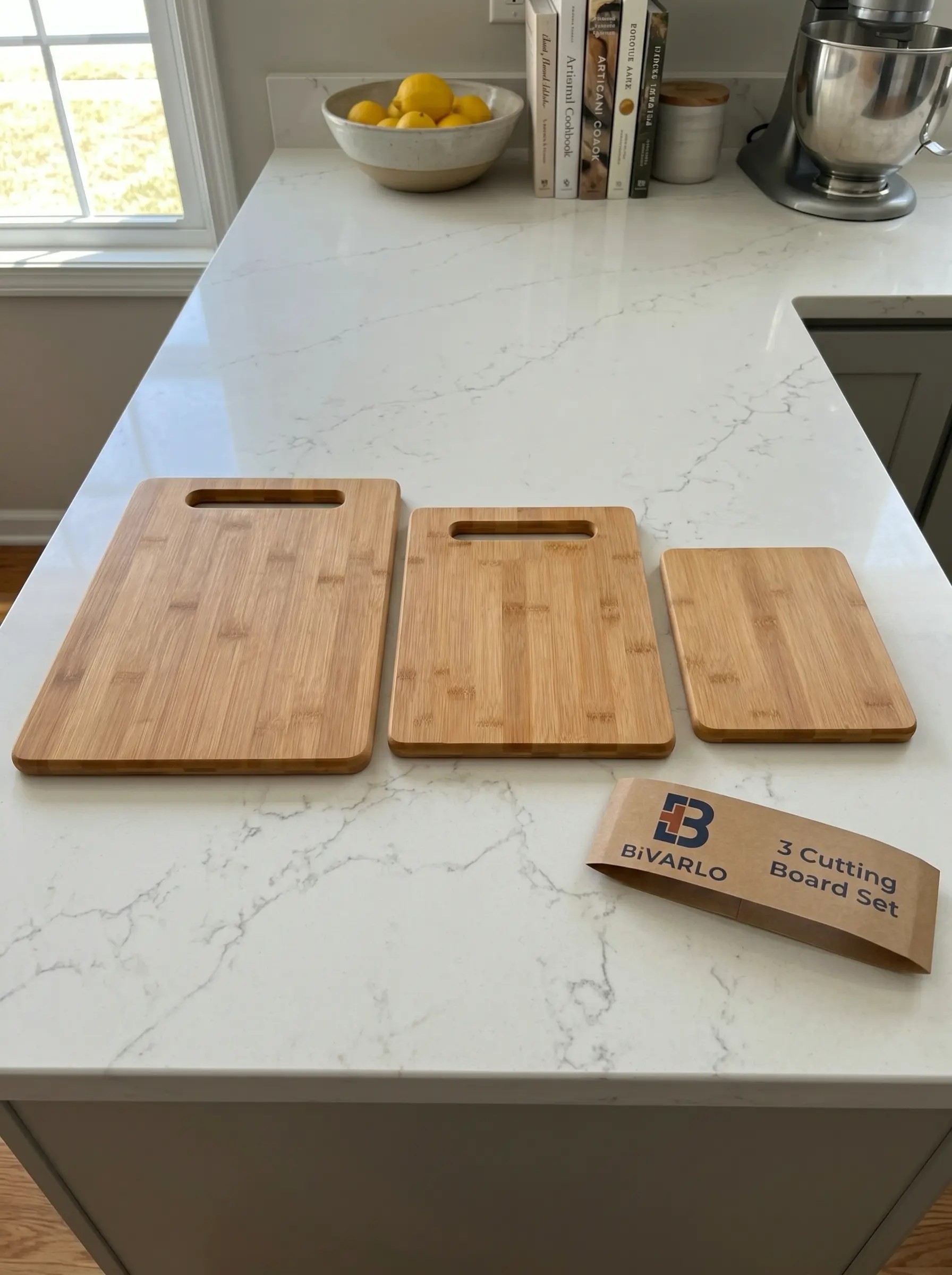
Bamboo Cutting Board Pros and Cons
Bamboo deserves its own section because it splits opinion. Below is an honest look at bamboo cutting board pros and cons so you can decide whether bamboo belongs in your kitchen.
Pros
- Sustainable: bamboo grows up to 35" per day, no replanting.
- Hard & dense: harder than maple by Janka rating.
- Naturally antimicrobial: silica discourages bacteria.
- Affordable: good wooden cutting boards in bamboo cost half of walnut.
Cons
- Mildly tougher on knives: the same silica that fights bacteria dulls edges faster than walnut.
- Glue quality matters: always buy food-safe certified.
- Visible glue lines if you love the look of solid hardwood.
A popular benchmark is the Totally Bamboo Destination cutting board series, which engraves U.S. state and country shapes into laminated bamboo. Charming gift items, but the bamboo is thin (about 0.5"), best treated as serving boards, not daily prep surfaces. For a main bamboo prep board choose something thicker, certified food-safe, and finished with a proper food safe wood finish, like the Bivarlo board below.
Bivarlo Bamboo Cutting Board
Formaldehyde-free glue · Thick & stable · Deep juice groove · Hand-finished
High Density Polyethylene Cutting Board vs Wood
A high density polyethylene cutting board (HDPE) is the white plastic board used in commercial kitchens: dishwasher-safe, NSF-certified, color-coded. It’s also the most knife-dulling option on this list and cracks under heavy use.
| Feature | Wood | HDPE Plastic |
|---|---|---|
| Knife-friendliness | Excellent | Poor (dulls fast) |
| Dishwasher safe | No | Yes |
| Bacteria after use | Self-heals; bacteria die in pores | Hides in knife grooves |
| Lifespan | 10+ years with care | 1 to 3 years |
| Look on the table | Beautiful | Industrial |
For most home cooks the answer is simple: keep one small high density polyethylene cutting board in the drawer for messy raw meat days, and use quality cutting board wood for everything else.
End Grain Wood Cutting Board & John Boos Butcher Block
An end grain wood cutting board is built so the wood fibers point up at the cutting surface, like looking at a bundle of straws end-on. Knife edges slip between the fibers instead of slicing across them, so the board self-heals and your edge stays sharper. The trade-off is weight (12 to 20 lbs) and price.
The benchmark is the legendary John Boos butcher block, made in Effingham, Illinois since 1887. A John Boos R-Board in 1.5" rock maple is the closest thing to a forever board you can buy off the shelf.
Best Cutting Board for Raw Meat
The best cutting board for raw meat has three traits: a deep juice groove, a non-porous or self-healing surface, and enough weight that it doesn’t slide while you butcher. In wood, that’s an end grain hard maple butcher block. In plastic, that’s a 0.5" HDPE board with rubber feet.
Many home cooks compromise by keeping two boards: a stunning hardwood board for vegetables, herbs, and bread, plus a dedicated raw-meat board (HDPE or a separate wood board with a juice groove). It’s the simplest cross-contamination control there is.
Featured Pick: Bivarlo Bamboo Cutting Board
If you want a single board that solves most of the problems in this article, knife-friendly, food-safe, beautiful enough to serve from, and priced for real kitchens, our Bivarlo Bamboo Cutting Board is built for exactly that job. We designed it because we couldn’t find a bamboo board on the market that nailed all three of thickness, food-safe glue, and a proper juice groove.
Bivarlo Bamboo Cutting Board
Organic bamboo · Deep juice groove · Food-safe finish · Reversible prep & serve surface
How to Clean a Cutting Board (Wood, Bamboo & After Chicken)
The single biggest mistake people make is putting wooden cutting boards in the dishwasher. Heat and moisture warp the wood, split the glue lines, and ruin the food safe wood finish. Here’s the right way to handle every common situation.
How to clean a cutting board (daily routine)
- Scrape off debris with a bench scraper.
- Wash with warm water and mild dish soap, both sides.
- Rinse and pat dry with a towel.
- Stand the board on its edge to air-dry fully, never lay it flat on a wet surface.
- Once a month, rub in food-grade mineral oil.
How to clean a wooden cutting board after chicken
Raw poultry is the highest-risk food in a home kitchen, so the steps for how to clean a wooden cutting board after chicken are stricter than the daily routine.
- Immediately after use, scrape juices into the trash. Don’t rinse first, that splashes bacteria around your sink.
- Wash both sides with hot water and dish soap.
- Sanitize with a solution of 1 tablespoon of plain white vinegar to 1 cup of water, or 1 teaspoon of unscented bleach to 1 quart of water. Wipe on, leave for one minute, rinse.
- Sprinkle coarse salt over the surface, scrub with half a lemon for 30 seconds, rinse.
- Air-dry on edge. Re-oil if the surface looks dry.
The CDC’s food safety guidance confirms that hot soapy water plus a sanitizing rinse is enough to handle salmonella and campylobacter on home surfaces, you don’t need to soak the board in bleach.
How to clean bamboo cutting board
Bamboo is a touch more sensitive than hardwood because of its laminated layers. To answer the common question of how to clean bamboo cutting board safely:
- Wash by hand with warm water and a small amount of dish soap.
- Never soak. Bamboo will swell at the glue lines and crack.
- Rinse, pat dry, and stand on edge to finish drying.
- Re-oil with food-grade mineral oil every 3 to 4 weeks. Bamboo dries out faster than walnut.
- If the surface ever feels rough or smells funky, do a salt-and-lemon scrub the same way you would with hardwood.
Food Safe Wood Finish: What to Use, What to Avoid
The right food safe wood finish seals the surface, repels moisture, and is non-toxic if it ends up in your dinner. The right answers are short and boring: food-grade mineral oil, beeswax, and carnauba wax. Everything else is marketing.
- Food-grade mineral oil: cheap, odorless, the workhorse of every wooden chopping board.
- Beeswax + mineral oil “board butter”: adds a soft, water-repelling layer that lasts longer than oil alone.
- Pure carnauba wax: a great top coat for an end grain wood cutting board.
- Avoid: vegetable oils (olive, sunflower), they go rancid. Avoid varnish, polyurethane, and tung oil finishes, they aren’t approved for food contact in unbroken form.
For more on which wood finishes are approved for food contact, the FDA’s guidance documents on indirect food additives are the authoritative source.
If you also work with wood at home, you might enjoy our guide on the best 90-degree corner clamp for woodworking, useful if you ever want to glue up your own end grain board, or browse the rest of our Bivarlo kitchen & workshop guides.
FAQ: Cutting Board Questions, Answered
Is the Totally Bamboo Destination cutting board worth it?
It’s a fun, gift-grade serving board with great state and country engravings, but at roughly half an inch thick it’s not built for daily chopping. Use it for cheese, fruit, and presentation, keep your real prep work on a thicker, heavier high quality wood cutting board.
What is the best wood for sharp knives?
Walnut and cherry are the kindest species for premium knives. They’re soft enough to protect the edge but dense enough to last. Hard maple is a close second.
How thick should good wooden cutting boards be?
Edge grain boards: at least 0.75 inches. End grain wood cutting boards: 1.25 to 1.5 inches. Thinner boards warp.
Can I put a wood cutting board in the dishwasher?
No. Heat and standing water destroy the glue lines and the food safe wood finish. Hand-wash only, even with bamboo, even with a “dishwasher safe” label.
How often should I oil my board?
Once a week for the first month, then monthly forever. If water beads on the surface you’re fine. If it soaks in, oil it that night.
Are bamboo boards really good wooden cutting boards?
Yes, laminated, food-safe-glued, properly finished bamboo behaves like a hardwood and is among the most sustainable options. Always buy from a brand that lists its glue and finish.
Final Word: Pick a Board You’ll Actually Use
The best board fits your kitchen, your knives, and your willingness to maintain it. Hard maple, walnut, and cherry are safe forever-board bets. End grain wood cutting boards and a John Boos butcher block are heirloom-grade. Quality bamboo, like the Bivarlo Bamboo Cutting Board, is the smartest balance of price, performance, and sustainability. Whichever you choose, hand-wash, dry on edge, oil monthly, and it’ll outlast every plastic board you’ve owned.