


Bivarlo™ Concealed Hinge Jig
Original price was: $ 178,97.$ 99,59Current price is: $ 99,59.
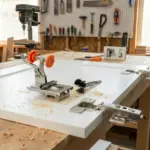
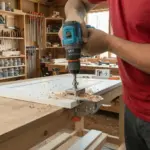
Many Makers Using Our Bivarlo Tools
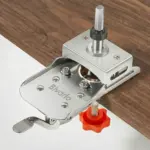
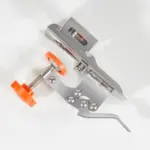
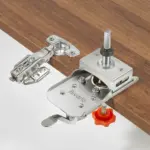
The Bivarlo™ Concealed Hinge Jig is the fastest, most accurate way to install concealed cabinet hinges on any cabinet door or frame. Steel drill bushings guide your 35mm Forstner bit to a perfect hinge cup — every single time. No measuring tape. No re-drilling. No uneven doors. Whether you are building a full kitchen, updating a single wardrobe, or running a professional installation route, this door hinge jig delivers factory-precision results from the first hole to the last.
Key Features
- Hardened steel drill bushings — guides your 35mm Forstner bit dead-straight for clean, tear-free hinge cups every time
- Integrated depth stop collar — limits every hole to exactly 13mm ± 0.2mm, the standard for all European concealed cabinet hinges
- Pilot hole guides for screw positions — machines hinge mounting screw holes in the same setup, no separate step needed
- Adjustable edge stop, 3mm–22mm — covers full-inset, half-overlay, and full-overlay doors in one cabinet hinge jig
- 6061 aluminum alloy body — rigid, lightweight, and built to outlast plastic jigs many times over
- Compatible with all 35mm concealed hinges — Blum, Grass, Hettich, Salice, King Slide, and every other European-standard hinge
- Works out of the box — includes 35mm Forstner bit, alignment pin, and instruction card. No calibration required

Bivarlo™ Concealed Hinge Jig — Precision Without Complexity
Installing concealed cabinet hinges the traditional way means measuring twice, marking a centre point, holding a drill steady, and hoping the bit doesn’t wander. With the Bivarlo™ concealed hinge jig, the process is reduced to three steps: align the edge stop, clamp the jig to the door, drill. The hardened steel bushings do the guiding — your hole is centred, at the correct depth, and clean on every piece.
The depth stop collar is pre-set to 13mm, the industry standard for all 35mm European-style concealed cabinet hinges from Blum, Grass, Hettich, and Salice. You cannot over-drill. You cannot under-drill. Every cup is identical, which means every hinge sits flush, every door closes squarely, and every adjustment is minor rather than a full re-hang.

What Makes This a Professional-Grade Cabinet Hardware Jig
Most affordable hinge jigs are injection-moulded plastic. The guide holes wear out under repeated use, the body flexes when clamped, and the edge references drift — slowly, but consistently — away from calibration. The Bivarlo™ cabinet hardware jig is milled from 6061 aluminum alloy and fitted with hardened steel bushings that are press-fit into the body.
The steel makes the difference. The bit bearing rides the bushing wall, not the body — and steel does not wear under the friction of repeated drilling the way polymer does. Whether you are drilling your tenth hinge cup or your ten-thousandth, the bushing geometry is unchanged. Professional cabinetmakers running production batches get the same accuracy as a hobbyist building a single wardrobe.

The Complete Cabinet Door Hinge Jig — Cup and Screw Holes in One Setup
A common frustration with basic hinge jigs is that they only drill the main hinge cup. You still need to remove the jig, calculate the screw hole positions, re-mark, and drill separately. The Bivarlo™ cabinet door hinge jig solves this with integrated pilot hole guides machined at the exact offset required by standard 35mm concealed hinges.
Set the jig once on the door edge. Drill the 35mm cup through the main bushing. Without moving the jig, drill the two pilot holes through the screw guides. Remove the jig. The hinge fits. All three holes are exactly where they need to be — no gap between the hinge plate and the door, no screw pulling to one side, no door misalignment at first hang.

Why Choose the Bivarlo™ Concealed Hinge Jig
Hardened steel guide bushings eliminate bit wander. Every 35mm cup is perfectly centred, regardless of operator skill level.
Integrated collar locks depth at 13mm ± 0.2mm — the industry standard for all European concealed cabinet hinges. No over-drilling.
Covers full-inset, half-overlay (9.5mm), full-overlay (16mm), and everything in between. One cabinet door jig for every project.
6061 aluminum alloy body and impact-resistant clamp arms. This door hinge jig handles daily professional use for years.
Main cup and both pilot holes drilled without repositioning. Complete cabinet hinge installation per door in under 60 seconds.
Works with Blum, Grass, Hettich, Salice, King Slide, and every other European 35mm cup hinge. Universal cabinet hardware jig.

Using the Bivarlo™ Concealed Hinge Jig — Step by Step
-
1
Set the overlay
Slide the edge stop to your required overlay — 3mm for full inset, 9.5mm for half overlay, 16mm for full overlay. Lock the stop. This single setting positions the hinge cup at the correct distance from the door edge for all your doors.
-
2
Position the jig on the door
Place the Bivarlo™ cabinet door hinge jig on the door panel with the edge stop flush against the door edge. Position it at the required height for your first hinge — typically 100mm from the top corner and 100mm from the bottom.
-
3
Clamp and lock
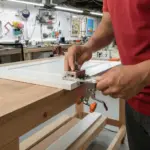
Engage the clamp arm to hold the door hinge jig firmly against the panel. The jig must not shift during drilling — the reinforced clamp system locks onto panels from 12mm to 28mm thick without marking the surface.
-
4
Drill the 35mm hinge cup
Using the included 35mm Forstner bit, drill through the main steel bushing. The depth stop collar stops the bit at exactly 13mm. Remove the bit — you will find a perfectly centred, clean-edged hinge cup with no tearout.
-
5
Drill the pilot holes
Without moving the cabinet hinge jig, insert a 5mm drill bit into each of the two screw guide holes. Drill to 12–15mm depth. Both mounting screw positions are now correctly placed at the standard hinge offset.
-
6
Fit the hinge and hang the door
Remove the jig. Press the hinge cup into the 35mm hole — it should seat flush with zero gap. Drive the mounting screws through the pilot holes. Hang the door. Adjust the hinge as needed. Every door on the project hangs identically.

What Can You Install With It?
Kitchen Cabinet Doors
Full-overlay, half-overlay, or inset kitchen doors — set the edge stop once per overlay type and drill every door in the run identically.
Wardrobe and Bedroom Cabinets
Large panel doors on wardrobes, built-in units, and bedroom furniture. Works on panels up to 28mm thick, including solid timber.
Bathroom and Laundry Units
Compact cabinet doors in wet areas. Clean hinge cups with no tearout in moisture-resistant MDF, melamine board, and plywood.
Office and Workshop Cabinets
Storage unit doors, workshop cabinet doors, and utility furniture. Repeatable accuracy across large batches of identical doors.
Technical Specifications
| Hinge bore diameter | 35mm (European concealed hinge standard) |
| Drilling depth | 13mm ± 0.2mm (fixed depth stop collar) |
| Edge distance range | 3mm – 22mm (adjustable edge stop) |
| Guide bushing material | Hardened alloy steel, press-fit |
| Body material | 6061 aluminum alloy + reinforced polymer clamp |
| Panel thickness range | 12mm – 28mm |
| Pilot hole guide diameter | 5mm (standard hinge mounting screw) |
| Compatible hinges | All 35mm cup concealed hinges — Blum, Grass, Hettich, Salice, King Slide |
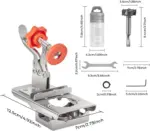
| In the box | Jig body, 35mm Forstner bit, alignment pin, instruction card |
| Jig body dimensions | 185mm × 68mm × 42mm |
| Weight | 380g |
| Warranty | 2 years — parts and workmanship |
Bivarlo™ vs Standard Concealed Hinge Jigs
| Feature | Bivarlo™ Concealed Hinge Jig | Typical plastic hinge jig |
|---|---|---|
| Guide bushing material | ✓ Hardened steel — zero wear | Polymer — wears and drifts |
| Depth stop | ✓ Fixed 13mm collar ± 0.2mm | None, or external collar only |
| Pilot hole guides | ✓ Integrated — same setup | Not included |
| Overlay adjustment | ✓ 3mm – 22mm sliding stop | Fixed, 1–2 positions only |
| Body rigidity | ✓ 6061 aluminum — no flex | Flexes under clamp pressure |
| Compatible panels | ✓ 12mm – 28mm | Typically 16mm – 19mm only |
| Compatible hinges | ✓ All 35mm European hinges | All 35mm European hinges |
| Includes Forstner bit | ✓ Yes — 35mm HSS bit included | Rarely |
Frequently Asked Questions
Also searched as


Reviews
Clear filtersThere are no reviews yet.